

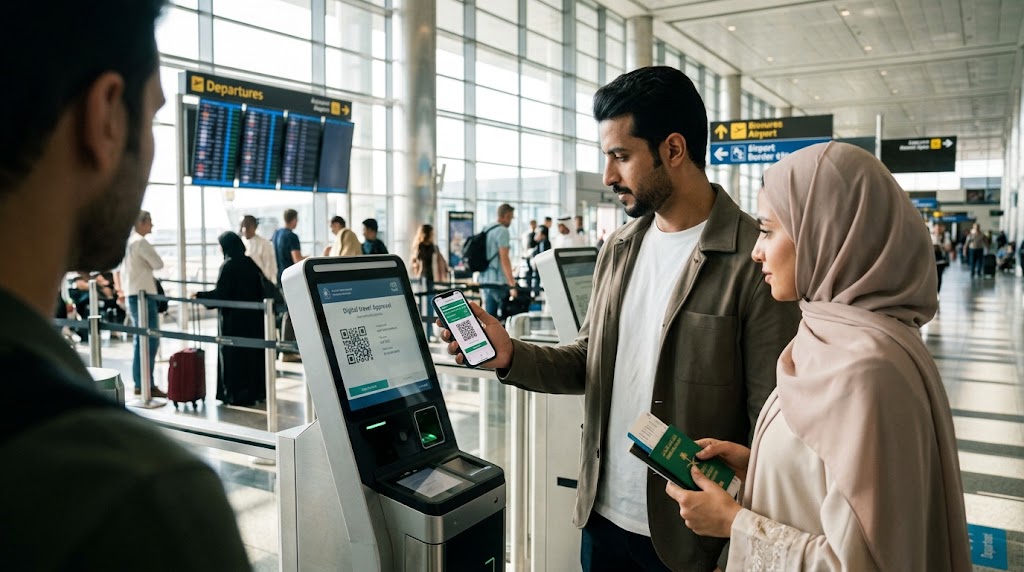
The New EES System at EU Airports: What It Means for Travelers from Saudi Arabia
Traveling to Europe soon?
Send us your destination and travel dates on WhatsApp and we will review your file for free before any booking.
If you have recently traveled to Europe, or plan to soon, you have probably heard about EES and ETIAS. They are new border-management systems, and they apply to different groups of travelers. Here is a simple explanation of what this means for Saudis and residents.
This information is for guidance only and the systems are still being updated. Always check official EU sources before you travel.
What is the EES?
EES (Entry/Exit System) is an electronic system that records the entry and exit of travelers from outside the EU at the external borders of the Schengen area. Instead of stamping passports by hand, the system records the traveler's data and fingerprints or facial image.
What changes when you arrive?
- Your passport data is recorded.
- A photo of your face is taken, and possibly fingerprints on your first entry.
- Entry and exit are recorded electronically and your days of stay are counted automatically.
After the first registration, later visits are usually faster.
EES vs ETIAS
| System | Purpose | Who it applies to |
|---|---|---|
| EES | Records entry, exit and traveler data | Non-EU travelers on short stays |
| ETIAS | Electronic travel authorization in advance | Travelers who are exempt from a visa |
Does a Saudi traveler need ETIAS?
Based on the available information, ETIAS is meant for travelers exempt from the Schengen visa. A Saudi citizen, or a resident whose nationality requires a visa, generally needs a Schengen visa already, so ETIAS does not apply in the same way. There have also been reports that the ETIAS launch was delayed to 2027, so check the official source to confirm.
What to prepare before you travel
- A passport in good condition.
- A valid Schengen visa if you need one.
- Trip documents (booking, insurance, address of stay).
- Extra time at the airport in the first days of rollout.
Does the EES change visa rules?
No. EES is a registration and monitoring system. It does not cancel visa requirements or the need for one. But it calculates your days of stay automatically, so accidentally exceeding 90 days within 180 days is easier to detect.
Practical tips
- Do not exceed the permitted stay.
- Keep copies of your documents.
- Check your passport validity before booking.
- If your trip covers several countries, plan carefully.
How Almorad helps
Almorad helps you with your Schengen visa: file review, preliminary booking, insurance and translation, and guides you on what you need before you travel. Service fees are shared when you contact us (request the service to find out more). The visa decision belongs to the embassy and there are no guarantees.
Related services and pages: Visa services • Flight and hotel reservation • Schengen visa for residents in Saudi Arabia
Frequently asked questions
Is EES mandatory?
Yes, for the travelers it covers at Schengen's external borders, though the details of implementation vary by border crossing.
Will they take my fingerprints on every trip?
The first registration usually includes biometric data, and later visits are easier, depending on each border crossing's system.
Do I need ETIAS if I have a Schengen visa?
No. ETIAS is for travelers who do not need a visa. Check the official source.
Does EES affect my visa application?
No. The visa application still goes through the embassy or visa center as before.
Want to travel with peace of mind?
Contact Almorad to prepare your Schengen visa, bookings and insurance properly before your trip.